
Master Subconscious Reprogramming

Subconscious reprogramming is the deliberate practice of updating the hidden beliefs that steer your automatic thoughts, emotional reactions, and daily habits. Because so much of what you do is handled beneath conscious awareness, even small shifts at this deeper level can compound into meaningful changes in confidence, relationships, health, and performance. The goal is not to suppress emotion or force positivity, but to install accurate, empowering patterns that make your best choices feel natural rather than effortful.
How the Subconscious Shapes Daily Behavior
Your subconscious is a fast pattern-matcher. It encodes past experiences, narratives from family and culture, and repeated self-talk into shortcuts that help you act quickly. These shortcuts become your default lens: what you notice, how you interpret events, and which impulses feel safe. If your lens tilts toward limitation—“I’m not ready,” “Money is scarce,” “People like me don’t succeed”—then your actions will echo that script. The encouraging truth is that these scripts are plastic: with repetition and emotion, they can be rewritten.

Belief Stacking: The Mechanics of Change
Changing a belief rarely happens in one leap. Most transformations are gradual, built through belief stacking: a sequence of small, credible upgrades. Instead of declaring, “I’m a world-class speaker,” you might adopt, “I can prepare a clear outline,” then, “I can deliver one useful insight,” then, “I can keep improving every talk.” Each upgrade is believable enough to practice and wins you evidence. Over weeks, the stack accumulates and the former identity no longer fits. This approach keeps your nervous system regulated while you expand what feels possible.
Subconscious Reprogramming: A Practical Blueprint
Start with a single life area—finances, health, creativity, or relationships—and define one specific outcome. Then translate that outcome into a small set of identity statements you can prove daily. Design cues and rituals that prompt these statements at the right moments, and measure by inputs (what you practice) rather than by distant outcomes (what you can’t control). The blueprint below shows how to turn principles into repeatable behavior you can track in fifteen minutes per day.
Step 1: Surface the Current Script
Begin by capturing the unfiltered story your mind tells in that domain. Write for five minutes without editing. Highlight phrases that assume limitation or inevitability. Choose one linchpin belief to upgrade—often it’s about capability, safety, or worthiness. You only need to move that belief a few degrees to change downstream choices.
Step 2: Install a Credible Upgrade
Create a statement that is both aspirational and believable: “I’m learning to market my work consistently,” or “I can regulate my nervous system before I decide.” Read it aloud and check for resistance. Tweak the wording until your body feels a slight exhale; that sensation signals a bridge statement you can stand on.
Step 3: Bind the Belief to a Tiny Action
Beliefs stick when they are paired with action and emotion. Choose a micro-behavior that proves the statement daily: send one pitch, walk five minutes, prepare tomorrow’s lunch, or rehearse one slide. The action should be so small that you can execute it even on difficult days. Consistency beats intensity for deep change.
Why Repetition and Emotion Matter
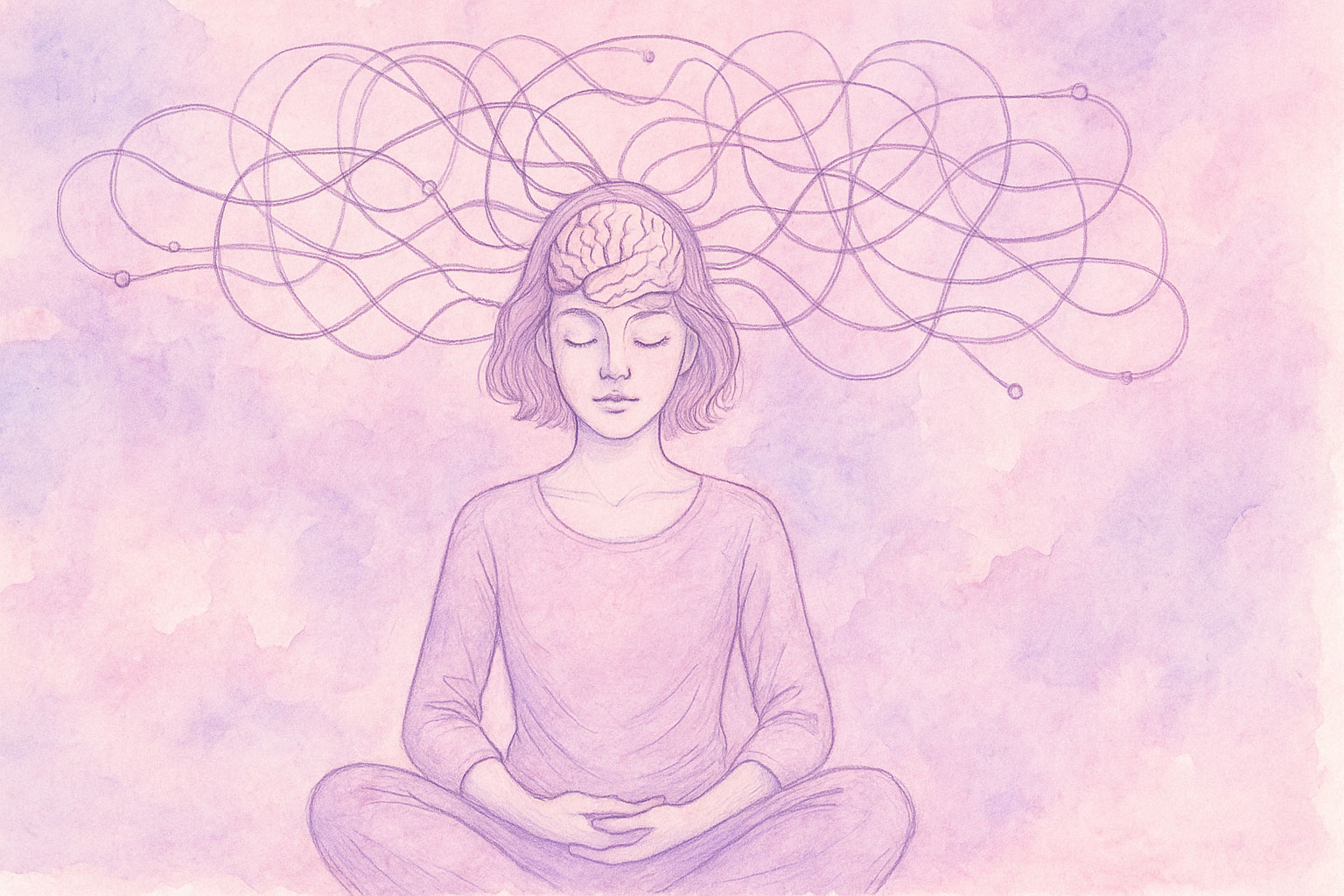
The subconscious learns through repetition, especially when repetitions are emotionally charged. That doesn’t require hype. Calm confidence, gratitude, and embodied relief are powerful signals. After each micro-action, pause for ten slow breaths and feel the satisfaction of integrity—“I did what I said I’d do.” This brief savoring stamps the action as important, creating a virtuous loop your brain wants to repeat.
Designing Your Daily 15-Minute Protocol
Time-boxing removes decision fatigue and protects momentum. Pick a fixed window—first thing in the morning or just before bed—and run the same short sequence. This predictability turns reprogramming into hygiene, like brushing your teeth, rather than a task that depends on motivation.
Your Evening Protocol (Example)
Evenings leverage the hypnagogic state—the relaxed border between wake and sleep—when the mind is more receptive to suggestion. Use the sequence below as a template and personalize the statements to your goal.
- Minute 1–3: Box breathing (inhale 4, hold 4, exhale 4, hold 4) to downshift your nervous system.
- Minute 4–7: Read your bridge belief aloud once, then visualize tomorrow’s micro-action from a first-person view.
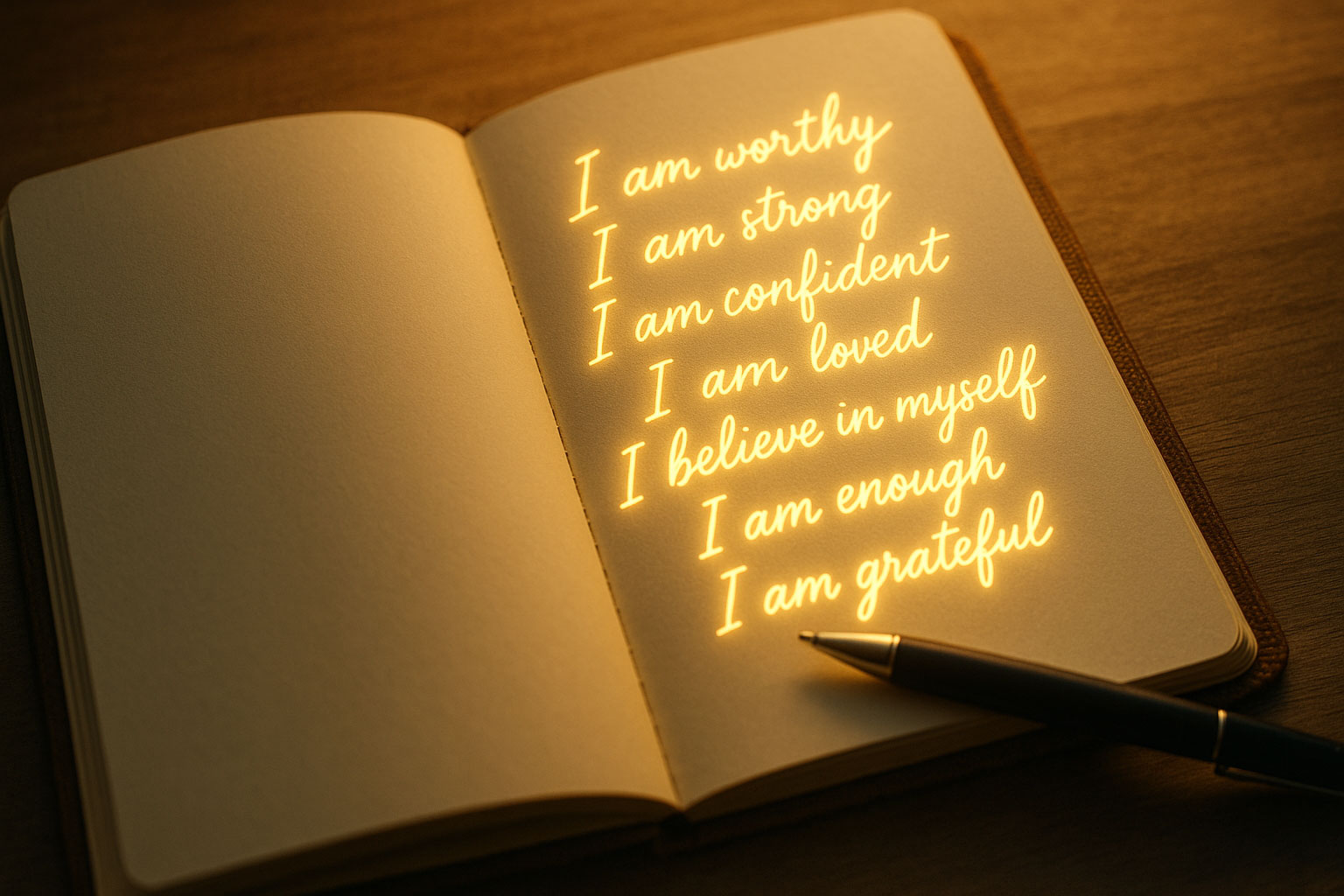
- Minute 8–12: Journaling prompt: “What evidence did I create today that supports my upgrade?” Capture three bullet points.
- Minute 13–15: Playback: Silently rehearse the micro-action and feel the relief of completion.
Evidence Banking and Feedback Loops
Keep an evidence bank—a running list of tiny wins that corroborate your new identity. Review it weekly. This practice converts vague hope into measurable progress. When resistance spikes, reread the bank and ask, “What action would the upgraded me take in the next ten minutes?” Then do only that. By collapsing focus to the next proof point, you bypass analysis paralysis and feed the loop that builds trust in yourself.

Handling Resistance Without Losing Momentum
Expect friction. Old patterns are efficient, and efficiency feels safe. Rather than treating resistance as failure, use it as data. If you routinely skip your action, it may be too big or scheduled at a bad time. Shrink the action until completion becomes near-certain—half the number of reps, half the duration, or just the setup step. Celebrate completion, not volume. Momentum compounds when you prove you can keep promises to yourself daily.
Language Upgrades That Rewire Identity
The words you choose frame possibilities. Replace absolutes with process language. Swap “I can’t” for “I haven’t yet.” Trade “I’m bad at sales” for “I’m improving my sales conversations by practicing one opener a day.” Process language keeps the nervous system open to learning. Over time, the brain updates its model of you—from someone trying to someone becoming.
Integrating Body and Environment
The mind does not reprogram in isolation. Sleep quality, protein intake, hydration, daylight exposure, and movement all modulate your capacity to focus and regulate. Likewise, your environment can cue your upgraded identity: a pre-packed gym bag by the door, a checklist on your keyboard, or a sticky note on the fridge with your one action for the day. Make the desired path frictionless and the old path inconvenient.
Measuring What Matters
Track inputs you control and signals that change is embedding. Useful metrics include streaks (days completed), ease (1–5 rating of effort), and self-concept statements (“I am someone who…” rated weekly). Outcomes will lag; let them. When inputs are consistent and self-concept ratings trend upward, outcomes tend to follow. Keep reviews short—ten minutes on Sunday is plenty—to stay adaptive without overthinking.
Case Patterns: Finance, Health, Creativity
Across domains, the pattern is similar: define a bridge belief, pair it with a micro-action, rehearse it visually and physically, then bank evidence. In finances, a creator might adopt, “I can make one clear offer daily,” and prove it by sending a single outreach message. In health, “I can nourish my body at breakfast,” proven by assembling a high-protein plate. In creativity, “I ship imperfect drafts,” proven by publishing a short post three times a week. Each pattern shrinks the gap between intention and action.
Using Cues: If–Then Plans and Time Anchors
If–then plans convert vague goals into executable scripts: “If I start the coffee machine, then I write two sentences.” Time anchors bind actions to existing routines: after brushing teeth, before opening email, during a daily commute. The simpler the anchor, the higher the completion rate. After a few weeks, you’ll feel a subtle pull to act—the hallmark that the behavior has migrated into the subconscious lane.
When to Level Up the Belief
As your evidence bank grows, your bridge belief will start to feel too small. That’s your cue to upgrade it. Keep the same micro-actions if they’re still easy, or nudge them slightly. The aim is a staircase, not a jump. Each level should feel like a stretch you can complete on your worst day. This pacing preserves streaks, which are the oxygen of identity change.

Common Pitfalls and Elegant Recoveries
All-or-nothing thinking: Missing a day doesn’t break the system; resuming immediately strengthens it. Overloading protocols: Limit to one focus area for two to four weeks before adding another. Seeking novelty over consistency: Keep the ritual identical so your brain associates the sequence with safety and success. Tracking too many metrics: Inputs, ease, and a weekly identity check are enough.
How This Approach Scales
Once learned, the protocol becomes a template you can redeploy anywhere. You’ll notice an emerging meta-belief: “I am someone who can learn any skill with steady practice.” That belief dramatically widens your future. It also alters relationships—others feel your grounded confidence—and reduces procrastination, because your actions no longer depend on fleeting motivation. You’ve built a machine that reliably converts intention into behavior.
Bringing It All Together
At its core, subconscious reprogramming is an integrity practice: align what you say you value with what you repeatedly do. Select a believable upgrade, bind it to a tiny action, rehearse and savor completion, then bank the evidence. Protect a consistent fifteen minutes daily and let the staircase carry you. Months from now, you’ll look back and realize the person who doubted this path has been quietly replaced by someone who trusts themselves—and acts accordingly.