
How to Reprogram Your Subconscious Mind in 30 Days

The subconscious mind reprogramming process is one of the most powerful ways to transform your life. While the conscious mind is responsible for reasoning, planning, and decision-making, it is the subconscious that controls the vast majority of your daily behavior. Studies suggest that as much as ninety-five percent of our thoughts, emotions, and actions are influenced by subconscious programming. That means everything from how you respond to stress, how you handle money, and even how you approach relationships is guided more by automatic beliefs than by deliberate choice.
When your subconscious programming aligns with your conscious goals, success flows naturally. But when subconscious beliefs are negative or limiting, progress feels frustrating and slow. This is why many people fail to achieve their goals despite hard work and willpower. The real key is to learn how to reprogram the subconscious mind so that it supports your conscious desires and helps you create the life you want.
Why the Subconscious Mind Matters
The subconscious mind functions like an operating system, silently running in the background while you go about your day. It stores your habits, memories, and deeply held beliefs, then uses them to determine how you interpret the world and how you respond. When you encounter a situation, the subconscious instantly scans past experiences and sends a response, often before your conscious mind even has time to analyze what is happening.
For example, imagine someone who grew up hearing that “money is the root of all evil.” As an adult, they may consciously want financial success but subconsciously associate wealth with negativity. Without realizing it, they might procrastinate on opportunities, undersell themselves, or reject promotions. No matter how much they consciously want abundance, the subconscious programming resists it.
This is why reprogramming the subconscious is so important. It allows you to replace outdated or harmful beliefs with empowering ones, so that your automatic responses help rather than hinder you.
How Subconscious Beliefs Are Formed
Subconscious programming begins in childhood. From birth until about age seven, the human brain operates primarily in theta brainwaves. Theta is a state of high suggestibility, similar to light hypnosis. In this stage, children absorb information directly from their environment without the filter of critical thinking.

If a child hears statements like “you’re so smart” or “you can do anything,” these messages become empowering subconscious beliefs. If they hear “you’ll never succeed” or “life is unfair,” those messages can become limiting beliefs that persist into adulthood. Even indirect experiences, like watching parents argue about money or seeing peers rewarded for aggression, can create subconscious associations that influence behavior decades later.
The subconscious records these experiences not only as ideas but also with emotional intensity. If a belief is formed during a moment of strong emotion, it becomes even more deeply ingrained. This is why traumatic events or highly charged moments often shape lifelong patterns.
Historical Perspectives on the Subconscious
The idea of the subconscious is not new. Sigmund Freud was one of the first to propose that much of human behavior is influenced by unconscious drives and repressed memories. Carl Jung expanded on this by exploring the collective unconscious and the power of archetypes in shaping human behavior.
In the mid-20th century, psychologists began studying conditioning, showing how repeated experiences create automatic responses. More recently, neuroscience has confirmed that the brain is highly plastic, able to rewire itself through repetition and focused attention. This discovery of neuroplasticity provides the scientific foundation for modern subconscious reprogramming techniques.
While Freud and Jung provided the theory, today’s researchers offer evidence that reprogramming is not only possible but measurable. Brain imaging studies show how meditation, visualization, and affirmations can actually change neural activity, supporting the idea that subconscious beliefs are not fixed but flexible.
The Science of How to Reprogram Your Subconscious Mind
Neuroplasticity is the brain’s ability to reorganize itself by forming new neural connections. Each time you repeat a thought, emotion, or behavior, you strengthen its pathway. Over time, you can intentionally reprogram your subconscious mind by focusing on empowering beliefs and consistent habits. This shows that subconscious change is not mystical—it’s rooted in the science of repetition and neural wiring.
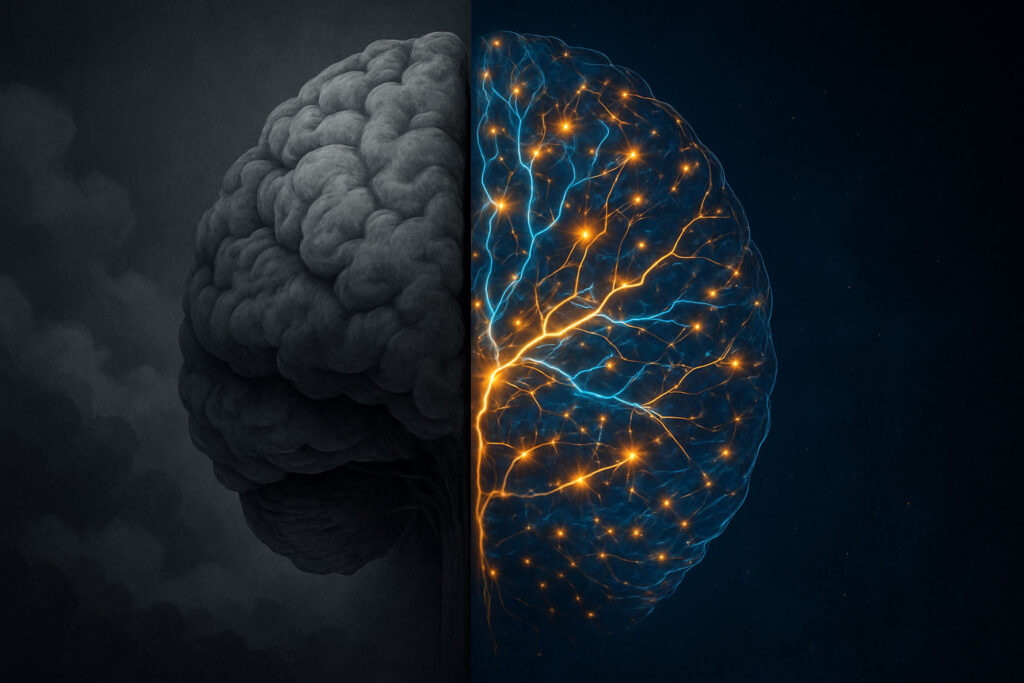
This explains why habits, both good and bad, become automatic. It also explains why reprogramming is possible. By intentionally practicing new thoughts and behaviors, you can build stronger neural circuits that eventually override old patterns. In other words, what you repeat, you become.
Techniques: How to Reprogram Your Subconscious Mind Effectively
If you’re wondering how to reprogram your subconscious mind, there are many accessible strategies that combine repetition, emotion, and imagination. Below are the most effective practices that anyone can apply daily.
Affirmations with Emotional Intensity
Affirmations are positive statements designed to replace limiting beliefs. However, they only work when you attach emotion. Simply repeating “I am confident” without feeling it is unlikely to make an impact. Instead, stand tall, breathe deeply, and embody confidence as you repeat the words. The emotional charge signals to the subconscious that the affirmation is meaningful.
Visualization and Mental Rehearsal
Visualization activates the same neural circuits as real experiences. By vividly imagining yourself succeeding in a goal, you create a sense of familiarity in the subconscious. This reduces fear and resistance when you encounter the real situation. Athletes, musicians, and performers use this technique to train the mind and body for success.
Hypnosis and Guided Meditation
Hypnosis places the mind in a deeply relaxed, receptive state where the subconscious is more open to suggestion. Guided meditations that use soothing voices and theta brainwave frequencies can achieve a similar effect. These practices bypass the critical conscious mind, allowing new beliefs to take root more easily.

Journaling to Reframe Beliefs
Writing thoughts down helps bring subconscious beliefs to the surface. By journaling regularly, you can identify recurring negative themes and challenge them. For example, if you notice the belief “I don’t deserve success,” you can reframe it as “I am learning and growing every day, and success is part of my journey.” Repetition of reframed beliefs eventually rewires the subconscious.

Subliminal Audio and Binaural Beats
Subliminal recordings deliver affirmations below the level of conscious hearing, while binaural beats guide the brain into relaxed states. Together, they can influence the subconscious directly. Many people use these audios while sleeping, ensuring the subconscious is exposed to empowering messages for hours at a time.
Habit Repetition and Environment Design
The subconscious thrives on repetition. Small, consistent actions accumulate over time to create new patterns. Surrounding yourself with supportive environments, uplifting books, and positive people strengthens the process. Just as negative environments reinforce limiting beliefs, positive environments accelerate reprogramming.
A 30-Day Plan: How to Reprogram Your Subconscious Mind Step by Step
To make this practical, here’s a focused 30-day challenge that shows you how to reprogram your subconscious mind using affirmations, visualization, meditation, and journaling. By following this plan, you’ll begin rewiring limiting patterns into supportive beliefs.
- Week 1: Identify limiting beliefs by journaling daily. Choose one empowering belief to focus on. Begin a morning routine of affirmations with emotion.
- Week 2: Add visualization. Spend ten minutes each morning imagining yourself living with the new belief fully integrated.
- Week 3: Introduce guided meditation or hypnosis recordings three to four times per week. Listen before bed or during deep relaxation.
- Week 4: Strengthen new habits by designing your environment. Surround yourself with visual cues like vision boards or inspiring quotes. Celebrate small wins daily to reinforce progress.
By the end of thirty days, you will notice a shift in how you think, feel, and respond. While deeper transformation takes longer, a month of focused effort is enough to create momentum.
Common Mistakes to Avoid
Many people struggle with subconscious reprogramming because they fall into common traps:
- Inconsistency: Sporadic effort weakens results. The subconscious requires repetition over time.
- Lack of emotion: Without feeling, affirmations and visualizations are empty words and images.
- Overwhelm: Trying to change too many beliefs at once dilutes focus. Start with one major belief.
- Impatience: Expecting instant results leads to frustration. Subconscious change is gradual but powerful.
Avoiding these mistakes increases the likelihood of success.
Signs That Reprogramming Is Working
Reprogramming often shows up in subtle ways before becoming obvious. Some signs of progress include:
- Reduced negative self-talk and inner doubt
- A greater sense of calm and resilience during challenges
- New opportunities appearing unexpectedly
- Positive habits becoming easier and more natural
- Improved confidence and self-esteem

These shifts signal that the subconscious is integrating new patterns.
Subconscious Reprogramming and Manifestation
For those who practice manifestation, subconscious alignment is essential. The law of attraction responds not only to conscious thoughts but also to subconscious beliefs. If you consciously affirm abundance but subconsciously expect lack, results will stall. By reprogramming the subconscious to expect abundance, you create harmony between desire and belief, allowing manifestation to flow more naturally.
Real-Life Examples of Subconscious Transformation
There are countless stories of people who have reprogrammed their subconscious and transformed their lives. A woman who struggled with stage fright for years began using visualization and affirmations daily. Within months, she delivered a confident speech at a company event, opening doors to promotions. A man raised with the belief that wealth was unattainable used subliminal audio and journaling to shift his mindset. Over time, he started a successful business and attracted financial opportunities he previously avoided.
These examples show that reprogramming is not just theory but a practical tool for real-world results.
Long-Term Benefits of Subconscious Reprogramming
The ultimate benefit of reprogramming the subconscious is freedom. When old limitations no longer dictate your behavior, you can choose how to live more intentionally. Confidence grows naturally, relationships improve, health habits strengthen, and financial opportunities expand. Most importantly, life begins to align with your authentic self.
Subconscious mind reprogramming is not about becoming someone else. It is about releasing outdated beliefs and stepping into the potential that has always been within you. With consistent practice, emotional engagement, and patience, you can rewrite the inner script that shapes your outer world.