
Habits for Self Confidence That Last

Developing strong habits for self confidence is one of the most reliable ways to create a stable foundation for personal growth. Instead of chasing quick fixes, building daily routines that reinforce belief in yourself gradually transforms your mindset and actions. Confidence is not something you are born with in fixed amounts—it can be trained and expanded through consistent practice. Over the course of weeks and months, the small decisions you make each day compound into lasting change. These changes alter not only how you feel about yourself but also how the world responds to you.
Why Habits Shape Self Confidence
Confidence is not just a fleeting emotion; it is the outcome of repeated actions that send a message to your subconscious that you are capable and trustworthy. When you practice habits for self confidence consistently, you create a body of evidence that proves to your inner critic that you are competent. Over time, your brain starts to associate your identity with success, reliability, and strength. This process makes confidence a natural state rather than something you must summon artificially.
For example, consider the difference between someone who promises themselves they will exercise daily and follows through versus someone who makes the same promise but breaks it. The first person builds confidence because each completed workout confirms they are dependable. The second person, by failing to act, confirms the opposite and chips away at their self-image. Habits therefore act as proof: proof of what you do and proof of who you are. With enough repetitions, these small demonstrations of reliability rewrite the way you see yourself, creating confidence that lasts beyond any single event.

Morning Rituals That Build Confidence
Starting the day with intention establishes momentum and mental clarity. By designing purposeful morning rituals, you strengthen the habit of controlling your first thoughts and actions. Confidence grows when you see yourself as the kind of person who begins each day with focus and energy rather than distraction. Even a brief, well-structured morning routine creates a foundation that influences every decision you make afterward.
- Affirmations: Repeating empowering statements like “I am capable of handling challenges” directs your subconscious toward strength and resilience. These affirmations work best when spoken out loud and paired with visualization, helping your mind align with your desired self-image.
- Exercise: Even ten minutes of movement signals discipline. Physical effort boosts endorphins, which in turn create a sense of well-being and personal power. Over time, the ritual of morning exercise becomes less about physical appearance and more about the identity of being disciplined and consistent.
- Journaling: Writing about goals, achievements, and challenges trains your mind to focus on progress. Over time, this habit reduces self-doubt because your accomplishments are clearly recorded. You can also use journaling to track affirmations, gratitude, and lessons learned, reinforcing a balanced view of yourself.
Morning rituals are not about perfection. They are about beginning each day by proving to yourself that you are in command of your choices. By stacking small wins early in the day, you establish the emotional foundation for confidence that carries into work, relationships, and challenges.
Micro-Habits That Reinforce Self Belief
Big transformations can feel overwhelming. Micro-habits, on the other hand, are small and manageable, making them easier to maintain consistently. These subtle behaviors may not seem significant at first, but repeated daily they shape how you see yourself and how others perceive you. They provide immediate feedback to your mind and body that you are capable and confident.
- Good posture: Standing tall and keeping your shoulders back communicates assurance to others while also sending a signal to your nervous system that you are strong.
- Eye contact: Practicing steady but comfortable eye contact during conversations builds presence and demonstrates confidence without words. Over time, this habit reduces social anxiety and reinforces trust in your ability to connect.
- Completing tasks: Following through on small promises, such as returning calls or finishing chores, creates trust in yourself. Each small completion reinforces the habit of reliability, which directly boosts confidence.
The beauty of micro-habits is that they fit seamlessly into your day. You don’t need extra time or elaborate planning; you simply choose to stand taller, look people in the eye, and finish what you start. Over time, these tiny actions create a foundation of trust in yourself that is unshakable.

Habits for Self Confidence in Communication
How you express yourself shapes how confident you feel and how others respond to you. Communication habits not only project assurance but also train you to trust your own voice. The more you practice, the more natural it feels to speak clearly and assertively. In fact, communication habits influence opportunities in your career, your relationships, and even how strangers perceive you.
- Active listening: Confidence in conversation comes not from dominating but from fully understanding. Listening with presence allows you to respond thoughtfully, which often leaves a stronger impression than speaking quickly.
- Clear voice: Practicing volume, pacing, and tone ensures your words land with strength. Reading aloud for a few minutes daily can sharpen this habit and reduce filler words that undermine authority.
- Positive language: Replace self-deprecating remarks with constructive framing. Instead of saying, “I might fail,” try, “I am learning and growing.” Language shapes self-image, and habitual positivity reinforces self confidence.
When communication habits align with confidence, interactions become opportunities rather than threats. Speaking up in meetings, asking questions, or introducing yourself to strangers becomes easier, creating further reinforcement that you are capable.
Tracking Progress to Strengthen Habits
Progress fuels confidence. By monitoring your habits for self confidence, you provide yourself with tangible proof of growth. Seeing evidence of your commitment builds momentum and reduces doubt. Tracking can be simple yet transformative, and it does not require expensive tools. The key is consistency.
- Habit trackers: Apps or simple journals allow you to check off daily tasks, which creates a small burst of accomplishment each time. Over time, seeing a chain of completed days builds pride and resilience.
- Weekly reflection: Taking ten minutes each week to write down your proudest moments builds awareness of progress. This practice also highlights patterns, helping you identify which habits create the strongest feelings of confidence.
- Reward systems: Celebrating milestones with small rewards reinforces the positive feelings associated with consistency. These rewards act as reminders that your efforts matter and deserve recognition.
Without tracking, progress can feel invisible, leading to discouragement. With tracking, you create a mirror that reflects your reliability back to you, making it easier to keep going when motivation dips. Over months, this evidence becomes part of your identity: you are someone who shows up for yourself, no matter what.

Evening Routines for Renewal
While mornings set the tone, evenings close the loop. The end of the day is a chance to reinforce confidence by reflecting, recharging, and preparing for tomorrow. Evening routines reduce stress and ensure that confidence does not erode through exhaustion or unresolved thoughts. A strong evening routine acts as a natural boundary, separating the productivity of the day from the rest and recovery you need at night.
- Gratitude practice: Listing three things you appreciate each night trains your brain to focus on wins rather than failures. Gratitude rewires your mind to notice abundance instead of lack, strengthening resilience.
- Digital detox: Stepping away from screens supports quality sleep and creates mental space for reflection. The habit of disconnecting from social media prevents comparison and self-doubt from undermining your confidence.
- Visualization: Seeing yourself achieving goals in your mind before sleep plants powerful images in your subconscious, reinforcing belief in yourself. Nighttime visualization often feels more vivid and emotionally charged, which enhances its impact.
Confidence is easier to access when you are well-rested and mentally clear. Evening routines ensure your days close with a sense of closure and pride, preventing negative cycles of worry from undermining your progress. Over time, these routines also improve sleep quality, which further strengthens emotional stability and confidence.
Building Resilience Through Consistency
Life is unpredictable. Confidence is tested not when everything goes smoothly but when obstacles appear. Building resilience through consistency ensures that even during setbacks, you maintain faith in yourself. Habits act as anchors, keeping you grounded in times of uncertainty. Resilience is not about avoiding struggle but about facing it with steady determination.
Consider the habit of exercising three times per week. On stressful weeks, you may feel tempted to skip, but choosing to show up anyway reinforces your self-image as someone who does not quit. This consistency is the bedrock of resilience, and resilience is the ultimate form of confidence. You prove to yourself that you can handle both ease and difficulty without breaking. Over years, these small acts of persistence compound into unshakable self trust.
Another example is speaking in public. The first attempt may be nerve-wracking, but by practicing regularly—whether through small team meetings, social gatherings, or formal speeches—you build tolerance for discomfort. Each repetition reduces fear and strengthens confidence, showing that resilience grows directly from habit.

Community and Environment Influence
Your surroundings play a massive role in sustaining confidence. Even strong habits can wither in toxic environments, while positive spaces make habits easier to maintain. Confidence is contagious, and being around people who uplift you magnifies your own belief in yourself. Conversely, negative company drains your energy and undermines progress.
- Supportive peers: Spend more time with individuals who encourage growth and minimize time with those who drain your energy. Peer influence is powerful, and choosing wisely reinforces your confidence.
- Decluttered space: A tidy environment creates mental clarity and reduces distractions, making it easier to maintain habits. Physical order often mirrors internal order, providing a sense of control and calm.
- Role models: Observing people who embody confidence provides a living blueprint you can adapt into your own life. Role models demonstrate that confidence is built, not given, and their example offers motivation when your own belief falters.
Environment is a habit in itself. By curating your spaces and social circles, you remove unnecessary friction and allow confidence to flourish naturally. This deliberate choice amplifies the power of your personal habits and makes them sustainable long-term.
Integrating Self Care as a Habit
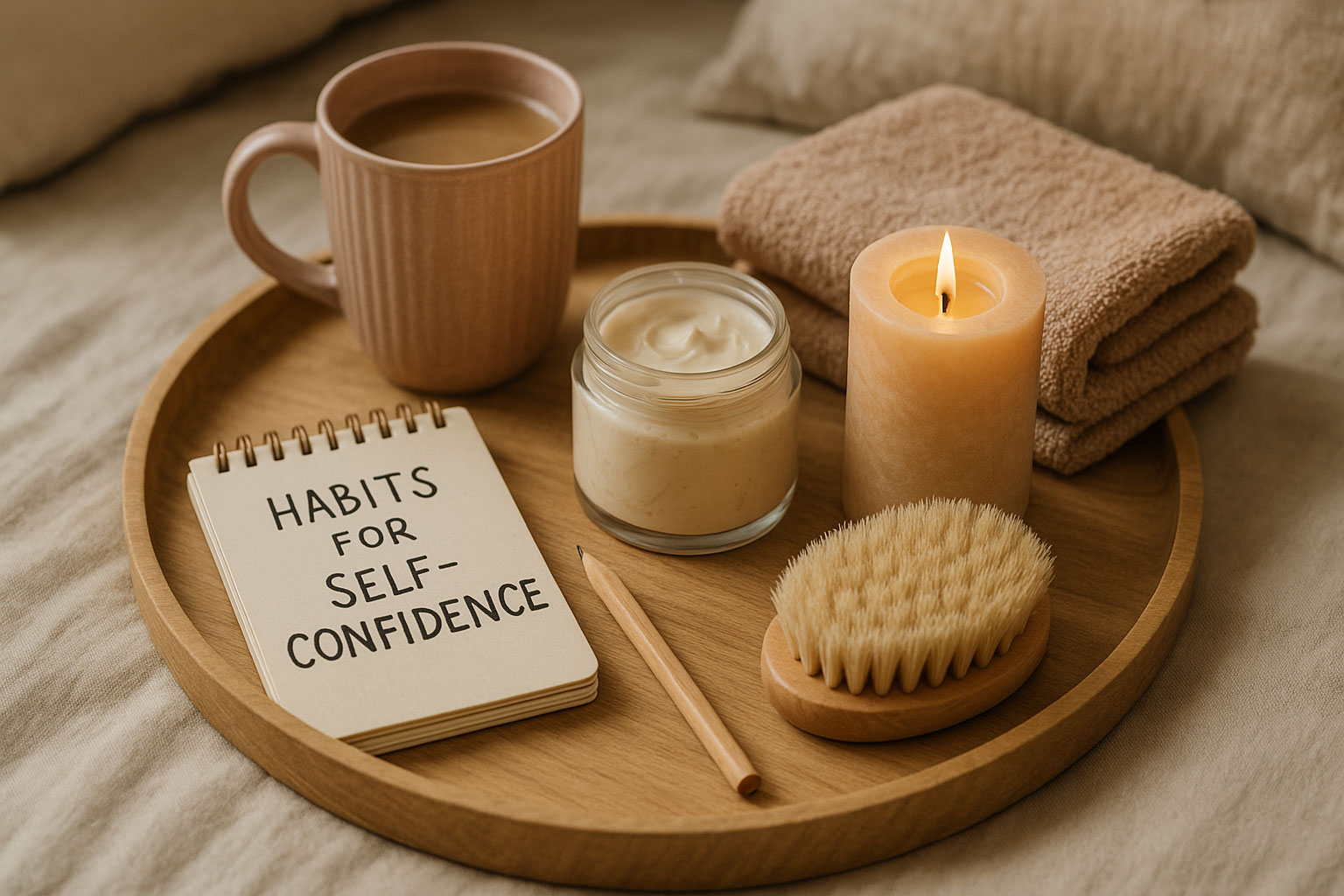
Self confidence is not purely mental. Physical, emotional, and spiritual care are essential components. When you habitually care for yourself, you reinforce the message that you are worthy of love and respect. This underlying belief strengthens all other habits for self confidence. Self care does not need to be elaborate or expensive; it only needs to be consistent and intentional.
- Nutrition: Eating nourishing meals supports steady energy and prevents mood swings that undermine confidence. Choosing whole foods over processed ones becomes a vote for health and self-respect.
- Rest: Consistently prioritizing seven to eight hours of quality sleep ensures your mind is clear and your emotions balanced. Sleep is often overlooked, yet it is one of the most powerful confidence boosters available.
- Relaxation techniques: Breathing exercises, meditation, or yoga practiced regularly act as resets, lowering stress and maintaining composure. These techniques strengthen your ability to remain calm under pressure, a core trait of confident individuals.
When self care is habitual, confidence becomes sustainable. Without self care, confidence quickly deteriorates under the weight of exhaustion and neglect. Investing in your well-being is not indulgence—it is a requirement for lasting self belief.
Making Habits Stick Long-Term
Building habits for self confidence is not about temporary boosts; it is about long-term transformation. The secret to lasting success lies in patience, adaptability, and self-compassion. Instead of expecting perfection, accept that setbacks are part of the process. Each time you restart, you prove resilience, which strengthens confidence even more.
Strategies for making habits stick include:
- Identity-based habits: Focus on becoming a confident person rather than just performing confident actions. Habits then flow from who you believe yourself to be. When you see yourself as confident, missing a single day does not undo the identity—you simply continue because it is who you are.
- Stacking: Attach new habits to existing ones. For example, after brushing your teeth, practice affirmations. The existing routine acts as a trigger, making the new behavior easier to remember.
- Accountability: Share your goals with friends or mentors who can encourage consistency and celebrate progress with you. External accountability provides support when internal motivation wanes.
Confidence is not static. It grows and evolves as you grow. By approaching habits as lifelong companions rather than short-term projects, you build confidence that can withstand challenges, transitions, and new stages of life.
When you create habits for self confidence, you build more than a checklist—you build an identity. Each repetition is a vote for the person you want to become. Over weeks, months, and years, those votes accumulate into unshakable belief in yourself. Confidence is not luck. It is earned through habits practiced consistently until they become second nature, shaping not only how you see yourself but also how the world sees you.